
The 2024 – 2025 trends to follow to stay at the forefront
The world of web design is constantly evolving and is marked by a set of trends transforming the online experience. From bold styles to eco-responsible practices, let's discover together what's making the web vibrate this year.
Get ready to be inspired for 2025! And be careful to keep in mind that the design must be designed to promote a fluid, simple and effective customer experience!
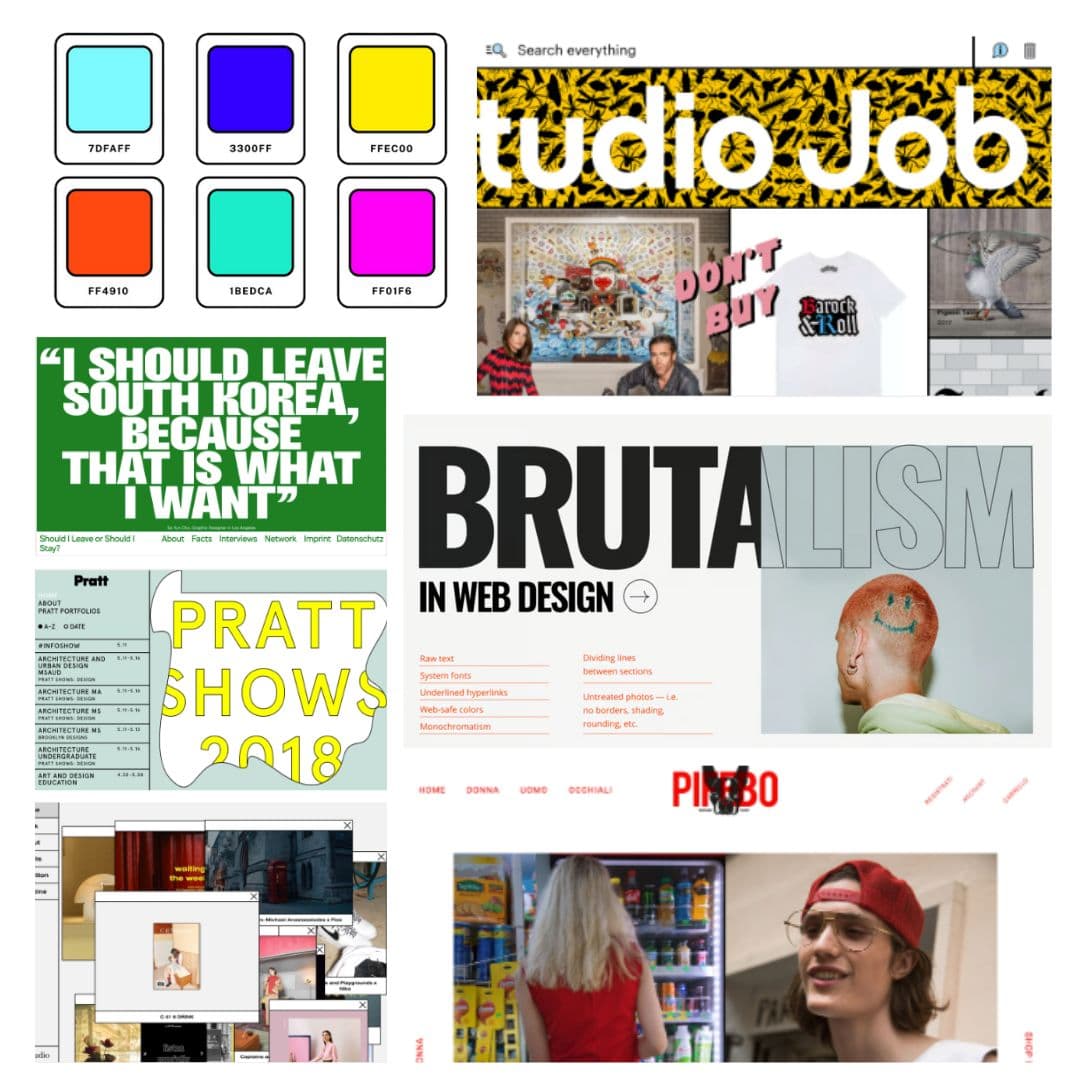
1. BRUTALIST Web design: when simplicity meets visual impact
Brutalism in web design emerges as a breath of rebellion against traditional aesthetic codes. He favors a boldly raw, unembellished approach. This movement has its roots in the architecture of the 1950s. It has recently reinvented itself in the digital domain offering a distinct and impactful aesthetic.
The key characteristics of brutalism
- Bold Fonts and Capital Letters: Brutalism uses large, often capitalized fonts, such as Bebas Neue or Anton. These fonts, which stand out for their robustness, immediately capture the attention of visitors and reinforce the visual impact of the site.
- Deliberately crude design: Inspired by brutal architecture that favors raw, unpolished concrete, this style is characterized by deliberately unfinished and rough visual elements. Irregular borders, asymmetrical layouts, and textured or raw backgrounds are common elements, reflecting an aesthetic of raw authenticity.
- Bright colors and strong contrasts: Brutalism plays with saturated color palettes and sharp contrasts to create visually dynamic compositions. Bold combinations, like a bright orange background with navy blue text, contribute to a strong and energetic visual impact.
- Unfinished Aesthetic: One of the most distinctive aspects of Brutalism is its deliberately unfinished appearance. Design elements can appear intentionally unfinished, reflecting an unpretentious approach that values function over form.**
Un peu d’histoire

Brutalism originated in the field of architecture in the 1950s with architects like Le Corbusier using raw concrete to create buildings. This movement aimed to offer an honest, un-embellished aesthetic. Since then, this movement has influenced many fields, including graphic design and web design.
In 2014, brutalism made a comeback in digital design emerging as a notable trend. The term “brutalism” was first used in the context of web design by Pascal Deville, co-founder of the Freundliche Grüsse agency. He is at the head of the site brutalistwebsites.com created to catalog this phenomenon online.
Brutalism: for whom? Why ?

Brutalism emphasizes authenticity and functionality. It stands out for its ability to break with the conventions of modern design offering a raw visual experience that reflects the values of originality and transparency.
- 1Honest, unclean thinking: Unlike clean designs that seek to hide complexity, brutalism exposes elements in a clear and direct manner.
- 2Anti-design approach: Brutalism rejects “smoothed” and superficial design trends in favor of an aesthetic that values imperfections and raw aspects. It offers a refreshing alternative to overly polished and homogeneous designs, creating a striking contrast to conventional norms.
- 3Engagement and distinction: By integrating brutal elements, websites can stand out in a saturated digital landscape. This approach can capture visitors' attention through its uniqueness and distinctive visual impact.
By combining visual brutality with strategic thinking, brutalist design can transform a website into a memorable and engaging experience, while reflecting an honest and direct approach to visitors.
2. MINIMALIST website: simplicity, clarity and sobriety in the service of excellence
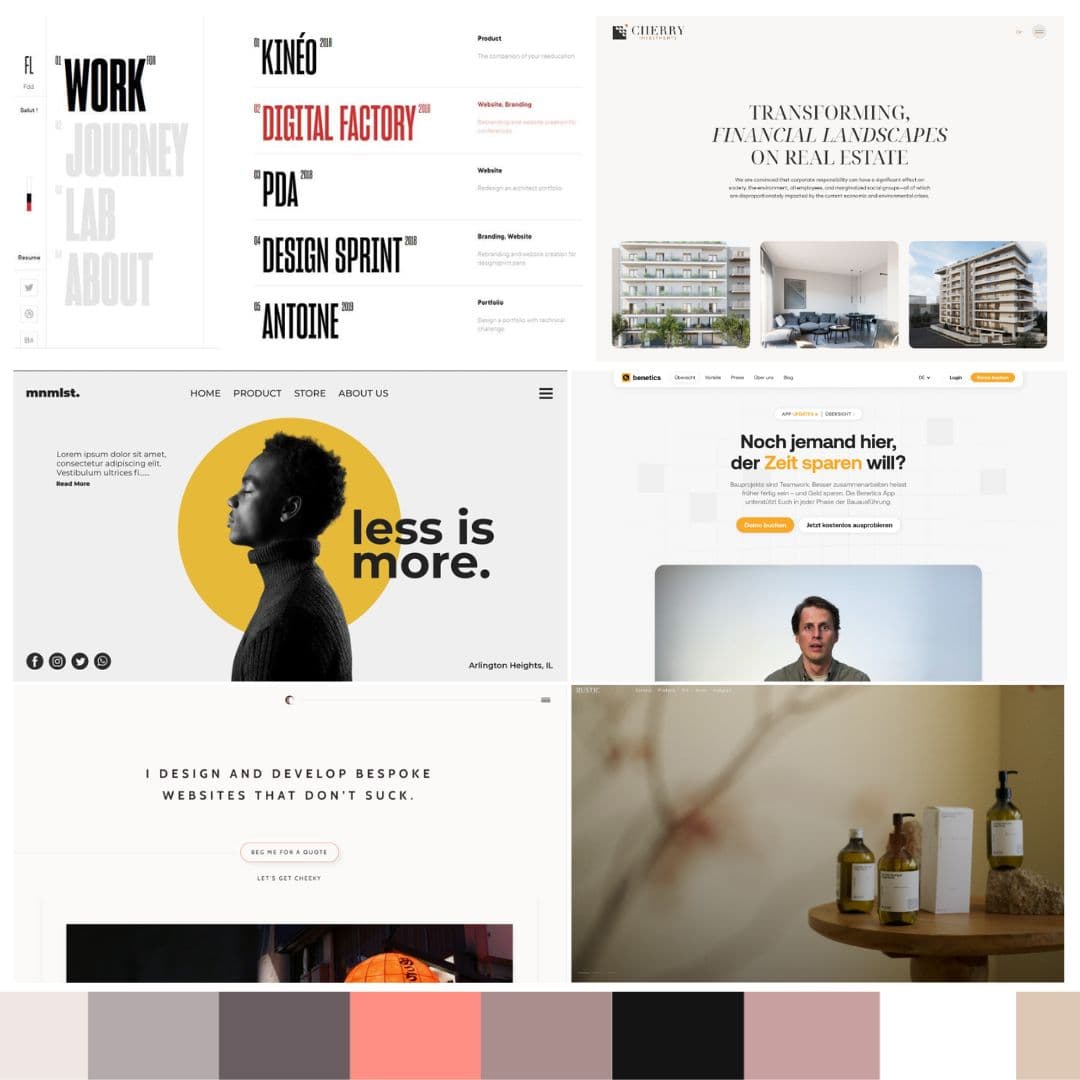
Website minimalism is distinguished by its approach focused on clarity, functionality, and simplicity. This decades-old trend continues to influence modern design practices with its ability to deliver refined, clutter-free user experiences.
The key characteristics of minimalism
- Clean designMinimalism favors a clean presentation for better clarity. By eliminating superfluous elements, minimalism focuses on the essentials. Clean lines and generous spacing help guide visitors through content smoothly. The use of white space is fundamental in minimalism. This apparent void is not a lack but a technique to improve readability and highlight the key elements of the design.
- Sober ColorsColors in minimalism are chosen to create a soothing and elegant atmosphere.
- Reduced Palette: Neutral shades such as white, gray and beige dominate. These colors bring a touch of sophistication while leaving room for subtle accents to highlight interactive elements. Subtle Accents: When bold colors are used, they are often limited to functional elements like call-to-action buttons, in order to direct attention without visually overwhelming the site.
- Clear TypographyTypography in a minimalist design is carefully chosen for its readability and aesthetics. Fonts such as Arial, Georgia, and Helvetica are favored for their clarity. Their simplicity ensures optimal readability on all types of devices. The typographic hierarchy with varied sizes and weights allows information to be structured in a logical way, facilitating navigation and understanding of the content.
Context and origin of minimalism
Minimalism has its roots in various artistic and architectural movements of the 20th century. Influenced by the principles of Bauhaus and modern design, minimalism emerged as a reaction against the excess and complexity of previous styles. In advertising and communications, minimalism was first adopted for its ability to convey clear and impactful messages with minimal visual distractions.
In advertising, minimalist campaigns have demonstrated that a simplified approach can have a powerful impact. Clean posters with direct messages and minimal images showed that less can often mean more in terms of effectiveness and impact.
Many brands simplify their logo to return to essential lines and declutter their visual identity. By reducing unnecessary elements, logos not only become more memorable, but also more versatile and adapted to multiple digital platforms.
The impact of minimalism in web design
Minimalism continues to be a mainstay of website styles due to its practical and aesthetic benefits.
-> Optimized performance: A clean design reduces file sizes and improves loading times. In addition to offering a fast and responsive user experience, this simplicity meets the requirements of respect for the environment.
-> Responsive design: Minimalism fits well with responsive design, where each element is optimized for different screen sizes while maintaining a consistent and functional appearance.
By integrating the principles of minimalism into your website, you not only create a modern and elegant site with an optimized user experience. You also meet the requirements of simplicity, efficiency and eco-design.
3. Interactive web design: between 3D effects and animations, total immersion
In contrast to minimalism, 3D effects and animations are essential on a growing number of websites. They offer depth and interactivity enriching the user experience in a significant way.
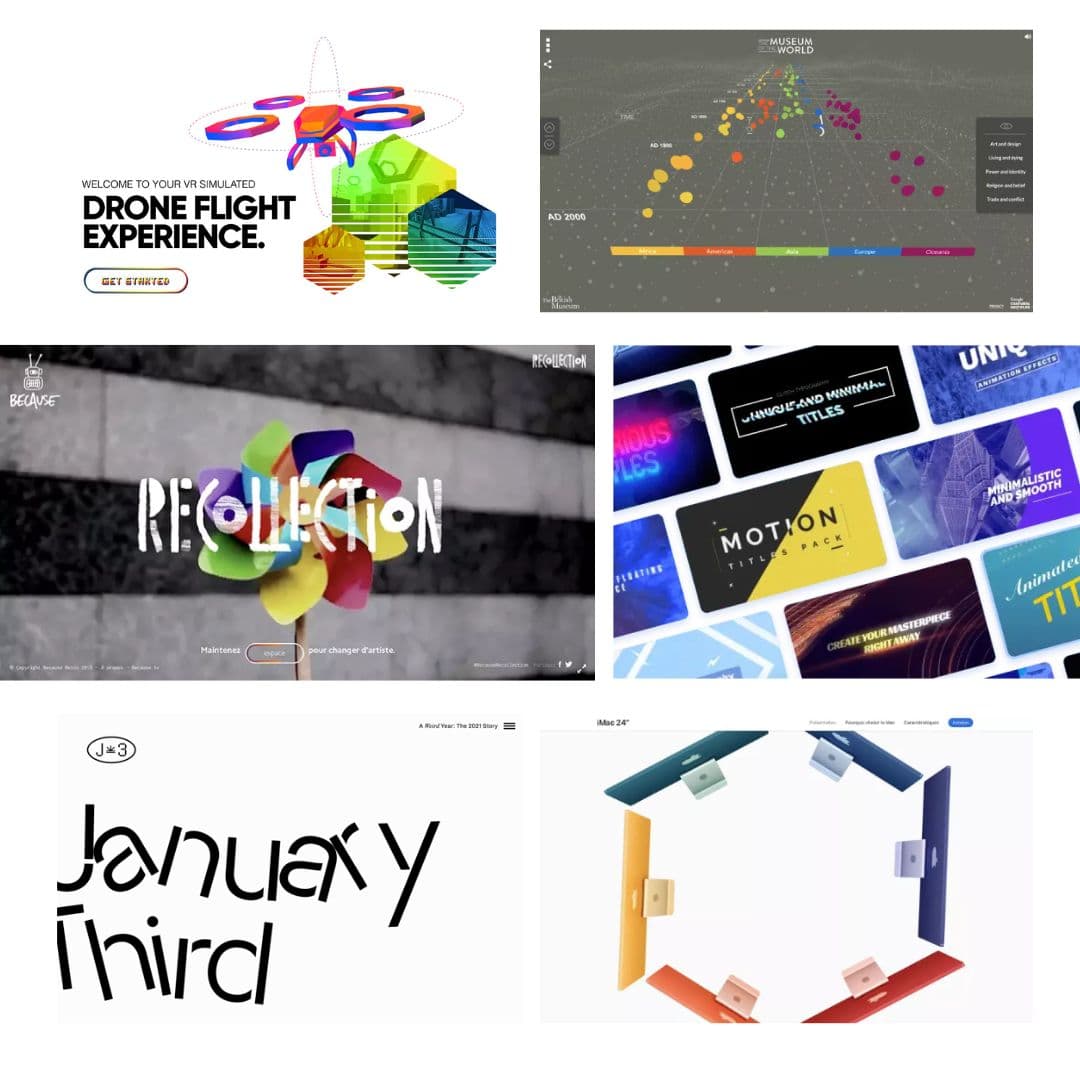
The main characteristics of interactive web designs
- 1Depth and dynamism: The integration of 3D effects adds marked visual depth, creating an illusion of volume that goes beyond traditional flat elements. This dynamic approach improves user engagement by immersing them in a more immersive and captivating experience.
- 2Interactivity: Animations make site elements more responsive and engaging. Interactive animations allow visitors to see the results of their actions in real time, whether by hovering over elements, clicking buttons, or scrolling down the page.
- 3Realism and immersion: Augmented reality (AR) and virtual reality (VR) technologies make it possible to create total immersion experiences. Visitors can interact with virtual environments or view 3D objects in their real space, providing a richer and more engaging visual experience.
- 4Gamification: The integration of gamification adds a fun aspect to interactions on the site. Elements like challenges, badges, and rewards encourage users to actively participate, increasing their engagement and loyalty.
- 5Subtle animation effects: Smooth transitions, parallax movements and scrolling animations add fluidity and elegance without overwhelming the user. These elements strengthen the user experience while maintaining a clean interface.
At the origins of this animated web design trend
Since the rise of dynamic web design, 3D effects and animations have gained popularity thanks to technological advances. Tools like WebGL, Three.js, and CSS animations have made it easier to integrate these advanced visual elements. In 2024, web design trends integrate these technologies to create more immersive and interactive visual experiences.
The comeback of 3D effects and animations is part of a broader context of research for an innovative and engaging user experience. These techniques aim to capture attention and enrich online interaction. These 3D animations are not just a fad. They meet a growing demand for online experiences that imitate and exceed physical reality.
All of these interactions add a new dimension to web design. They make online experiences more immersive and engaging. By leveraging these techniques, designers can create interfaces that capture attention and promote dynamic interaction while meeting users' growing expectations for rich, interactive visual experiences.
The continued evolution of web technologies promises new possibilities for integrating these elements in an even more fluid and innovative way.
4. Retro and nostalgia web design: the handmade and vintage touch 2024
The web design of 2024 reveals a return to more authentic and personal values through two major trends: handmade and subtle nostalgia. These elements bring warmth, personality and originality to websites, while breaking with the coldness of overly standardized designs.
Subtle Nostalgia: The Allure of the 80s
Subtle, 80s-inspired nostalgia is manifested through the use of retro patterns, soft color palettes, and visuals reminiscent of a bygone era. This trend is characterized by a reminiscence of the 80s with bold geometric patterns, neon colors, and vintage typography. Retro fonts, such as pixelated or serif fonts inspired by early computers and video games, add a nostalgic dimension to design. By reintroducing graphic elements from that era, designers create a comforting and familiar effect for users, while playing on emotions of nostalgia and comfort.
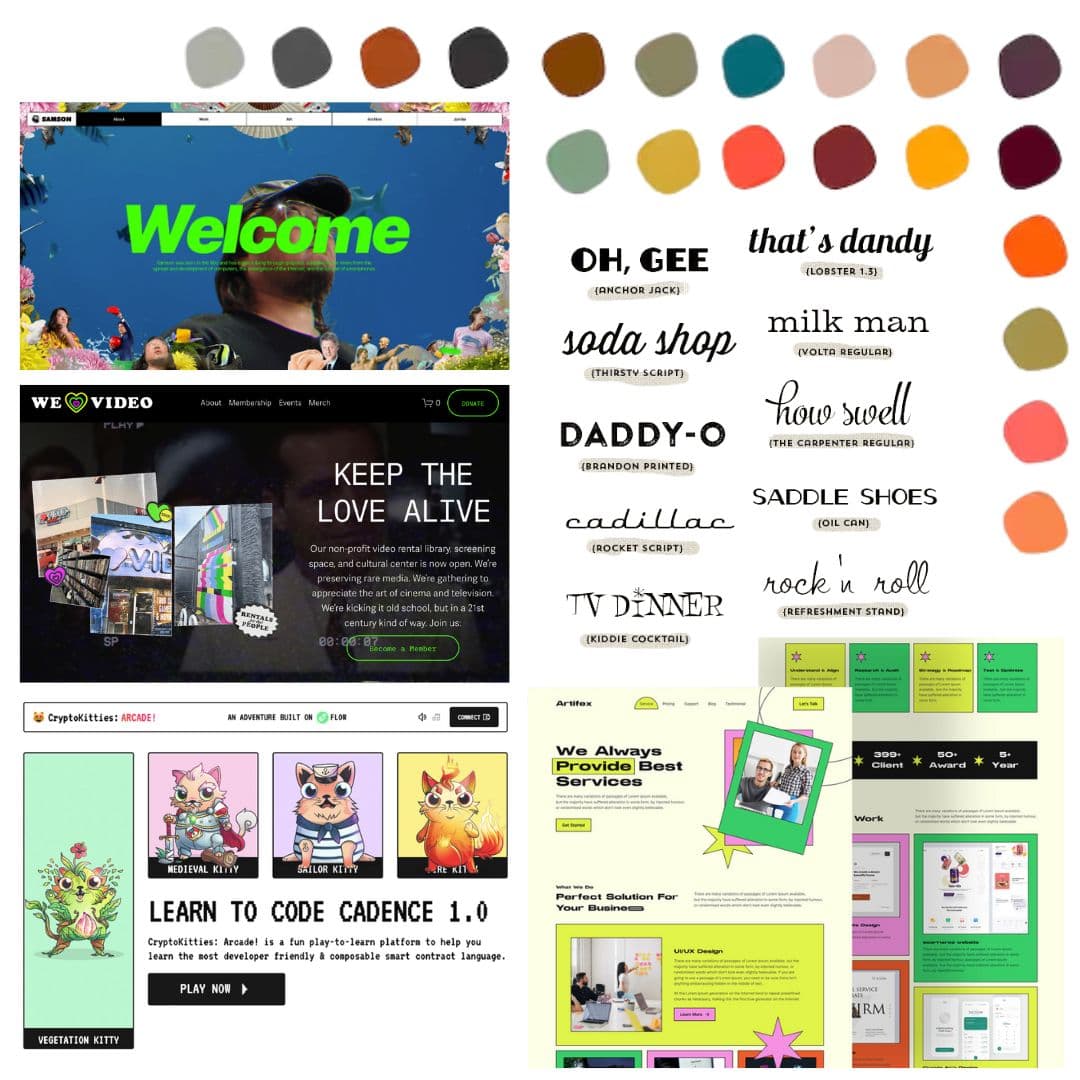
The main characteristics of retro/handmade designs
- Hand-drawn illustrations: they bring a personal and unique touch to infuse a touch of authenticity and uniqueness to your website. They can range from simple sketches to elaborate designs, providing a contrast to computer-generated elements.
- Retro Patterns and Colors: Using 80s-inspired patterns, like geometric shapes and grid patterns, paired with soft, neon colors.
- Vintage typographies: serif fonts or character styles reminiscent of old typewriters or the first computers are often used. Retro typographies add a historical dimension to the design while playing on the emotions of Internet users. A Proust madeleine site ;).
- Between reality and fiction: More abstract elements are favored to give character to the site. These sites move away from “smooth” web design with perfected images and very marked structure.
History and origin side
The handmade trend and subtle nostalgia have their roots in a reaction against overly uniform and standardized web designs. As the digital world turns to ever more automated and sophisticated solutions, these trends are reintroducing a human and tangible aspect to web design.
Nostalgia for the 80s isn't just about style. It is linked to a quest for comfort and authenticity in a saturated digital context. The revival of retro in design is a way for brands to evoke a bygone era while offering a deeper emotional connection with their users.
By incorporating these handmade and retro elements, you can give your website a unique personality that not only attracts visitors but also engages them on a deeper level.
ECO DESIGN & ECO-DESIGN: THE ESSENTIALS FOR 2024 AND 2025
No matter your favorite trend and the web design imagined, you won't be able to miss eco-design. Websites have a notable environmental impact through energy consumption and greenhouse gas emissions. Data centers, hosting websites, represent around 3% of global CO2 emissions. 33% of CO2 emissions from the digital sector come from websites and online services. Optimizing your site can therefore have a significant impact on reducing these emissions.
Our Smotly developers strive to apply best practices in sustainable IT and eco-design. GreenIT.fr constitutes a key resource for our agency but also for all professionals wishing to integrate sustainable development practices.
How to minimize the environmental impact of your website?
->Optimize the performance of your website:
- File Compression: Reduce the size of image, video and other resource files to reduce the volume of data to transfer.
- Use of CDN: Use Content Delivery Networks (CDN) to store and distribute resources from servers close to users, reducing energy consumption related to data transfers.
- Caching Techniques: Implement caching strategies to reduce the number of requests sent to servers and improve page loading speed.
- Reduction of external scripts: minimize the use of external scripts and plugins that can clutter web pages and affect performance.
-> Adopt emerging technologies: WebRTC or HTTP/3 contributes to faster and more efficient navigation, thereby reducing resource requirements for page loading. These technologies optimize data transmission.
-> Choose ecological hosting: Choose hosts who use renewable energies to power their servers. Some providers offer “green” or “eco-responsible” hosting options. At Smotly, we recommend Infomaniak!
-> Build a responsive web design: Make sure your site is responsive, that is, it adapts to different devices and screen sizes. This improves the user experience and can reduce the resources needed to adapt content.
THE WEB TREND 2024 - 2025: A WEBDESIGN COMBINING DESIGN AND SUSTAINABILITY
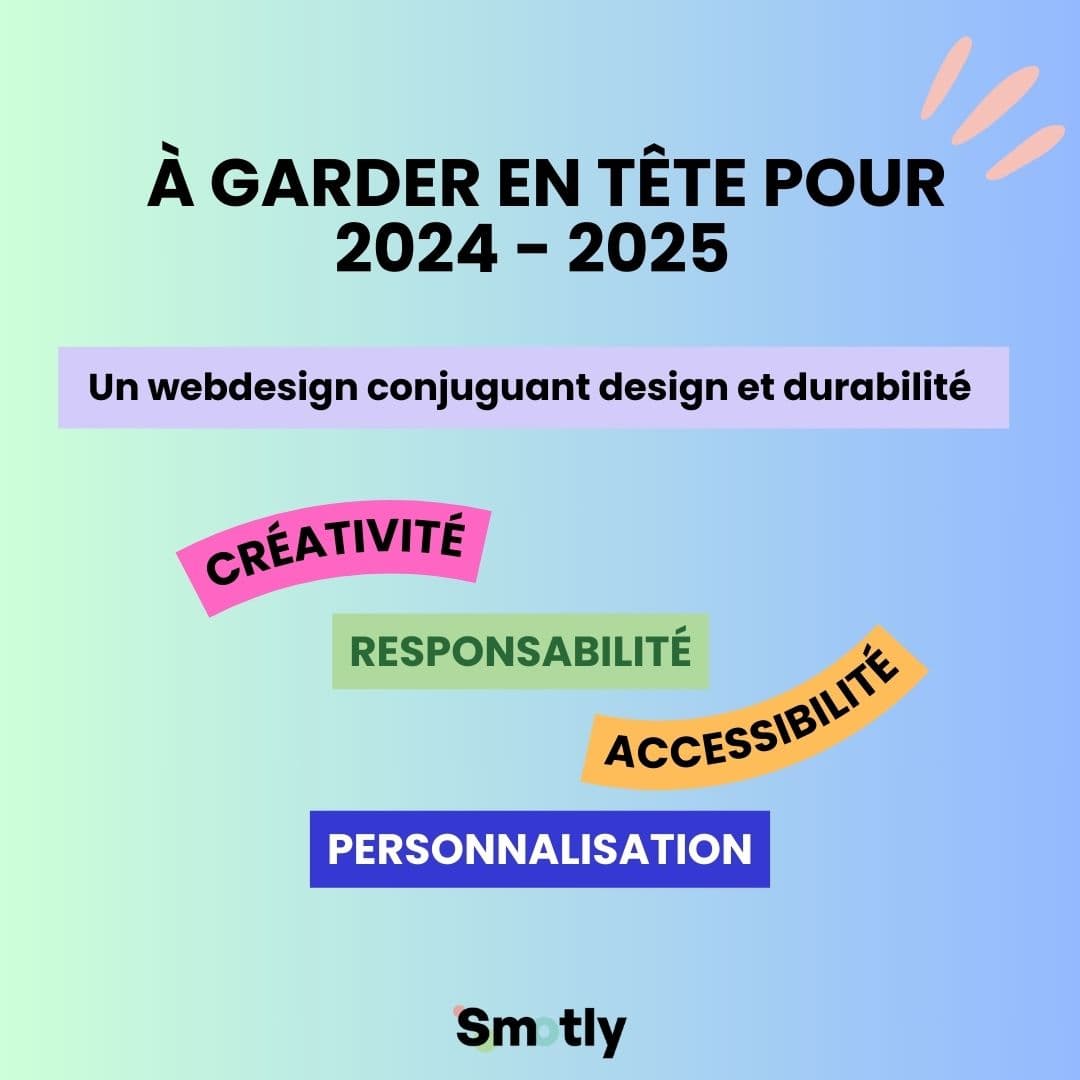
In 2024, web design trends combine CREATIVITY and RESPONSIBILITY. A captivating design is not enough. it must also beaccessible, functional and environmentally friendly. Authenticity and personalization are key to engaging visitors, while eco-responsible design meets the growing demand for sustainable practices.
By integrating these principles, you provide an online experience that attracts, engages and retains your visitors while affirming a sincere commitment to sustainability.